BOPIS
Buy Online, Pickup In-Store
For: R2Net (James Allen & Blue Nile)
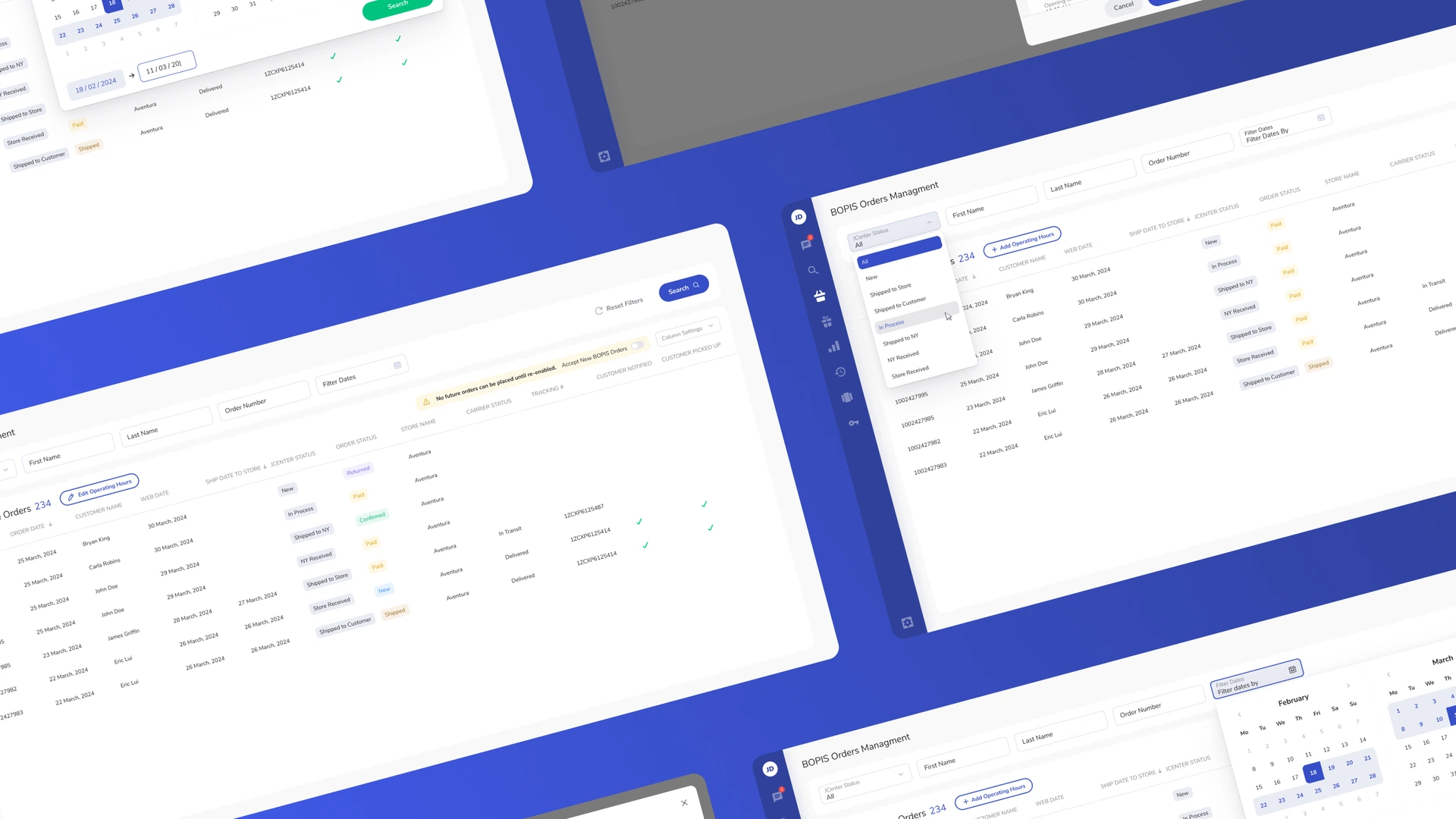
Addresses unpredictable pickup volume and limited back-room space by integrating each store's real-time availability directly into the store lists on both the Blue Nile and James Allen websites.
Complex System
UX Audit
Zero-to-one
Overview
As Blue Nile expanded its retail presence, customers increasingly wanted the option to buy online and pick up their jewelry in-store. On the surface, BOPIS (Buy Online, Pick Up in Store) sounds simple, but when the product is a high-value engagement ring, the operational and financial complexity becomes significant.
Store managers needed visibility and control, finance needed compliance for revenue recognition, and customers needed a smooth, trustworthy pickup experience. My challenge was to design a BOPIS management system inside Blue Nile’s internal Web6 platform that solved for operations, finance, and customer trust all at once.
KPIs
The project’s success was measured through three key KPIs:
Operational efficiency
Store managers could manage incoming orders from one dashboard.
Improved staffing, insurance, and storage planning.
Financial compliance
Customer pickup timestamps and electronic signatures for GAAP reporting.
Data automatically fed into finance systems with zero manual tracking.
Customer experience
Automated notifications reduced missed pickups.
Seamless in-store pickup process that built confidence and trust.
What We Wanted to Achieve
Give store managers full visibility into incoming shipments and pickup statuses.
Provide finance with audit ready proof of customer pickups.
Ensure customers had a reliable and professional pickup experience across all stores.
Difficulties
Statuses didn't match reality: Existing statuses like "Paid" or "Shipped" didn't work for in-store pickup flows. We needed new ones.
Partial shipments: A single order could arrive in multiple boxes, which complicated store management.
Store capacity: Some stores had minimal safe space; others had large stockrooms. The system had to work for both.
Finance constraints: GAAP compliance shaped design decisions as much as usability.
Wireframe
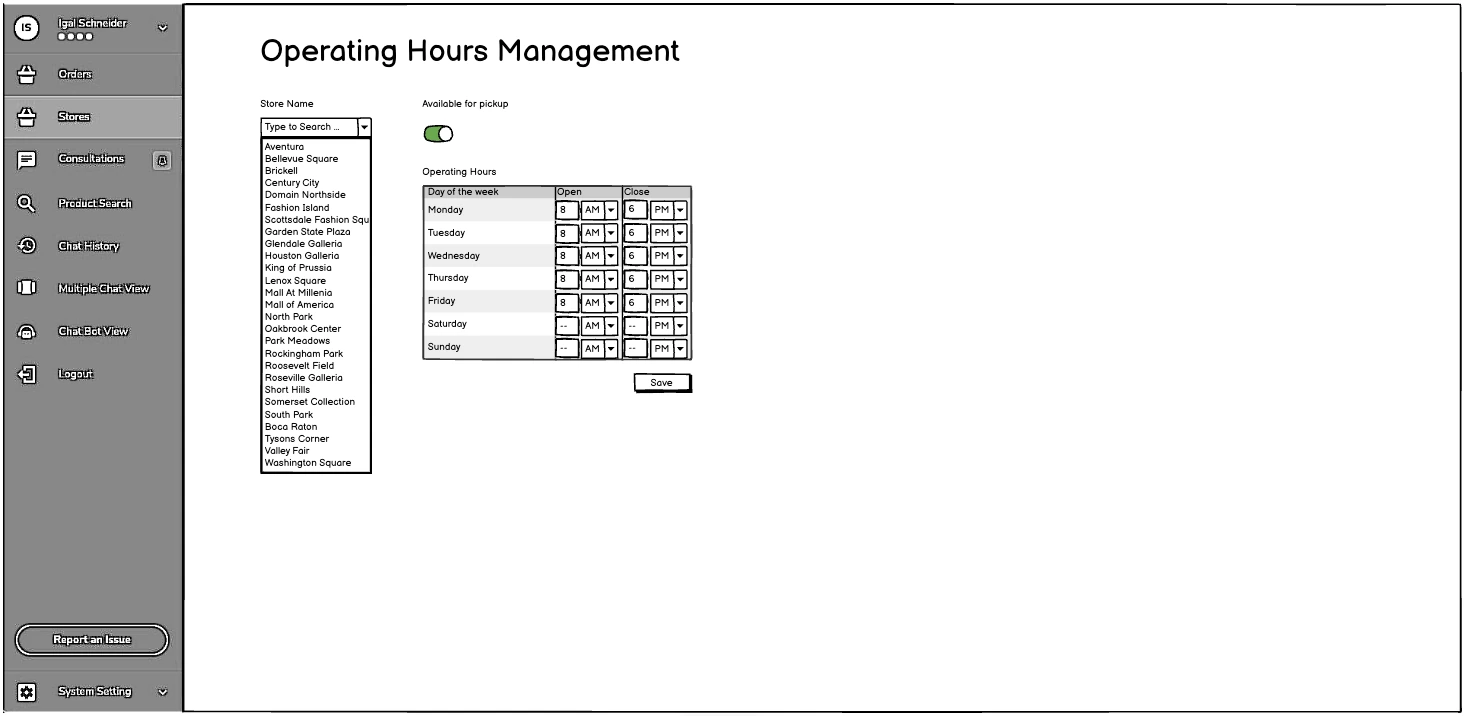
I started with low fidelity wireframes to validate the flow with stakeholders:
Managing store hours and availability.
A clear dashboard of orders by status.
Pickup approval flow with signature capture.
Iterations
Through testing and feedback with store managers and finance, I refined the flows:
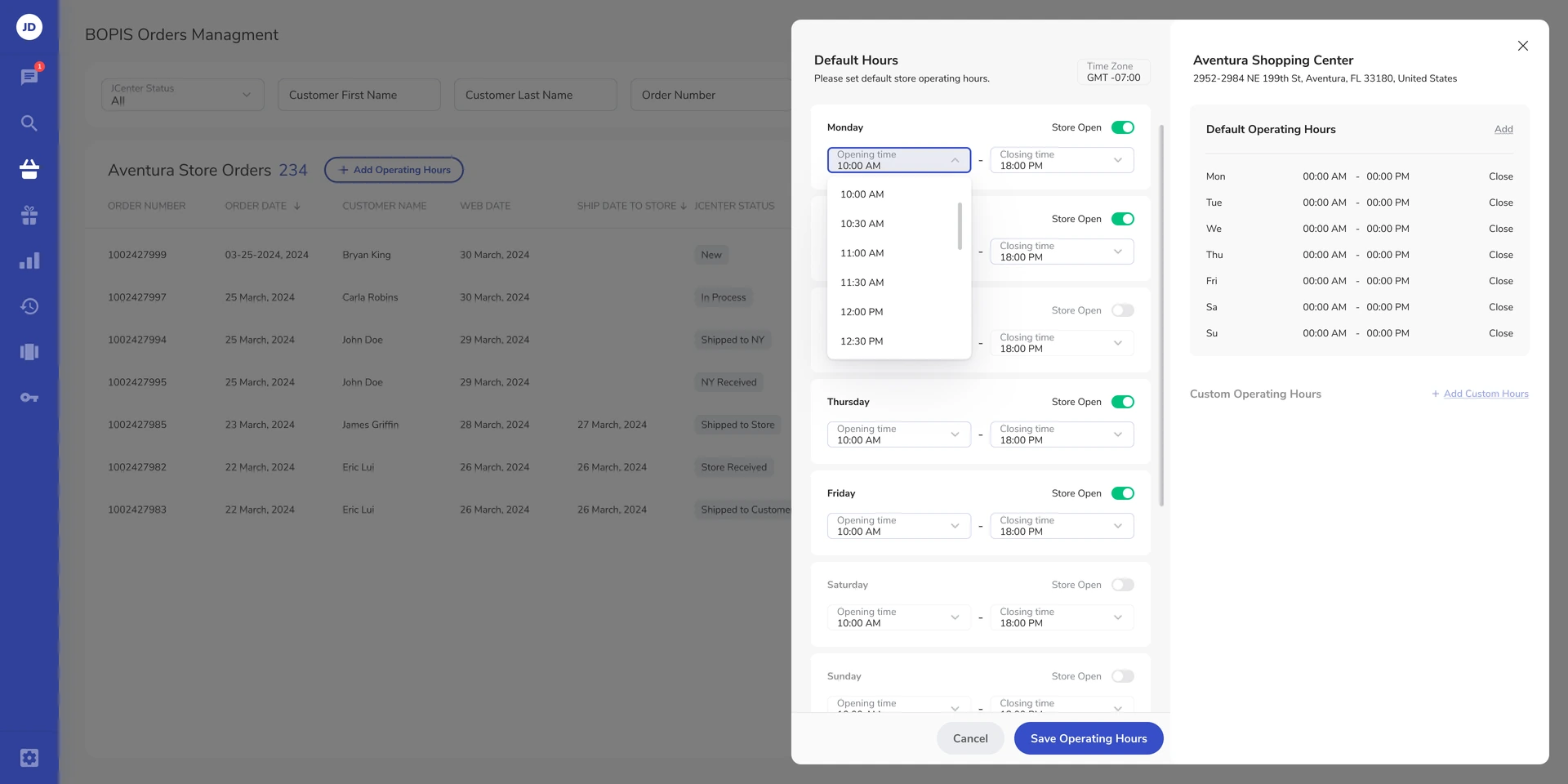
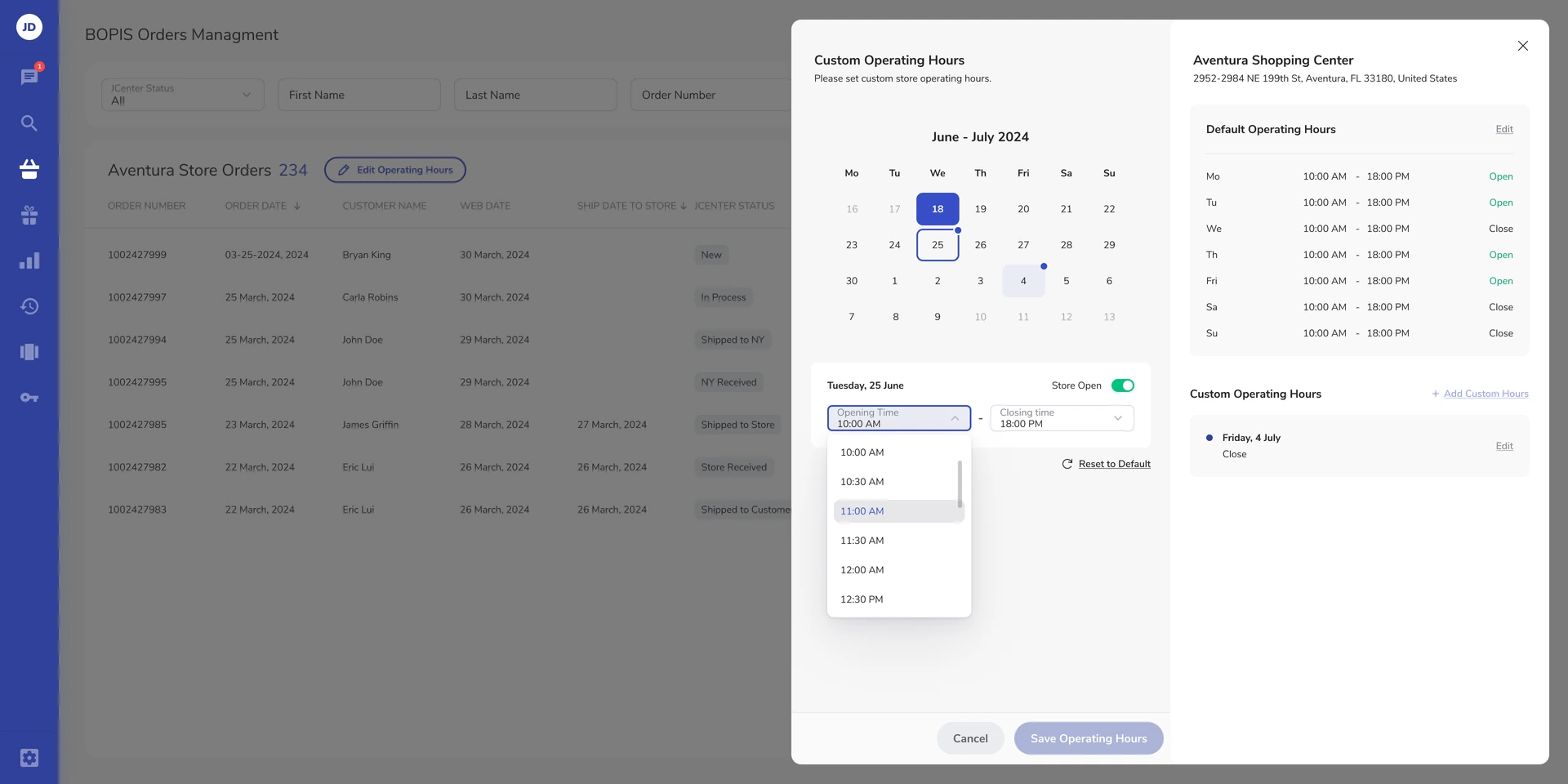
Operating hours flexibility
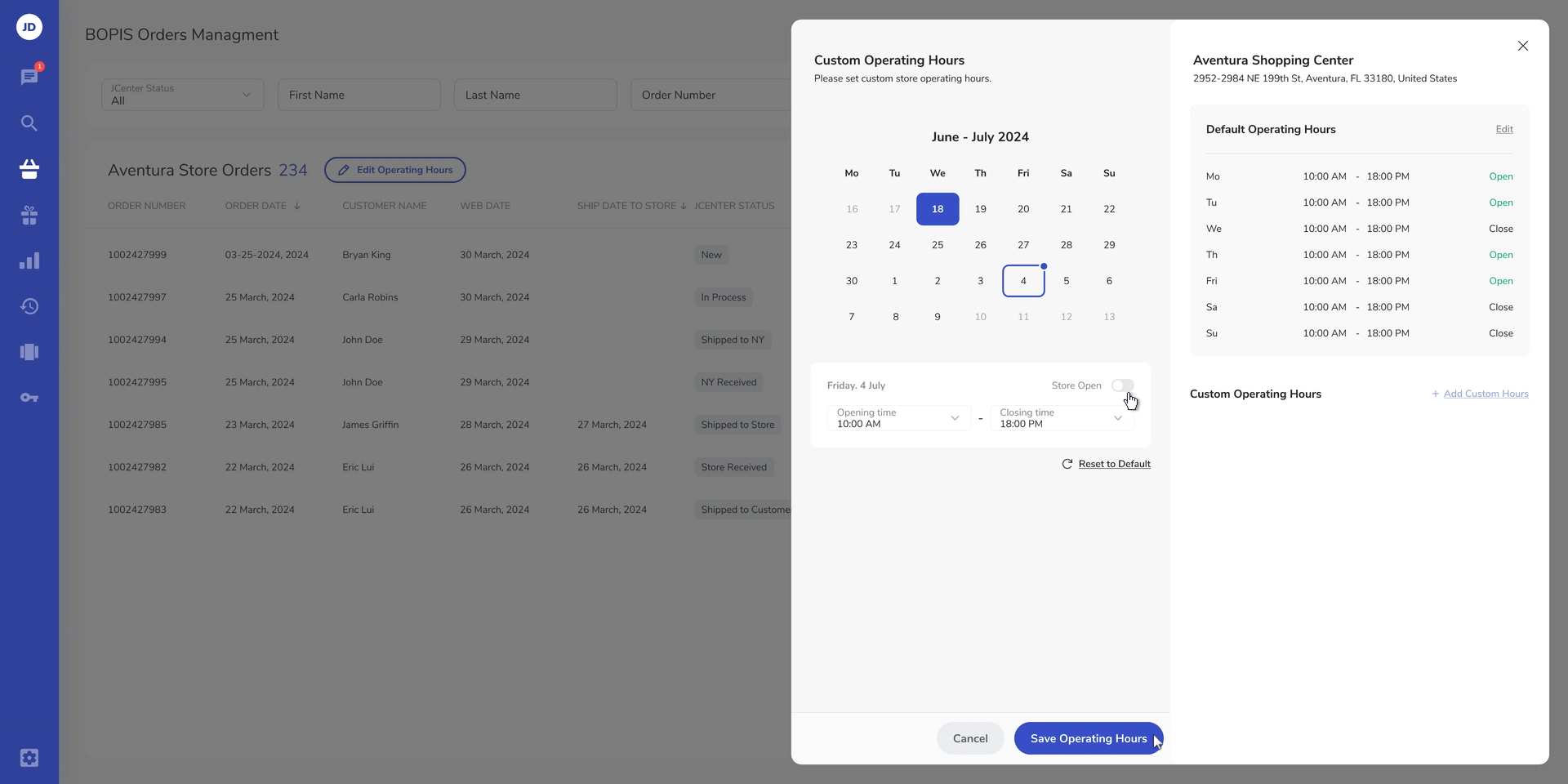
Moved from static schedules to dynamic custom hours (e.g., holidays, closures).
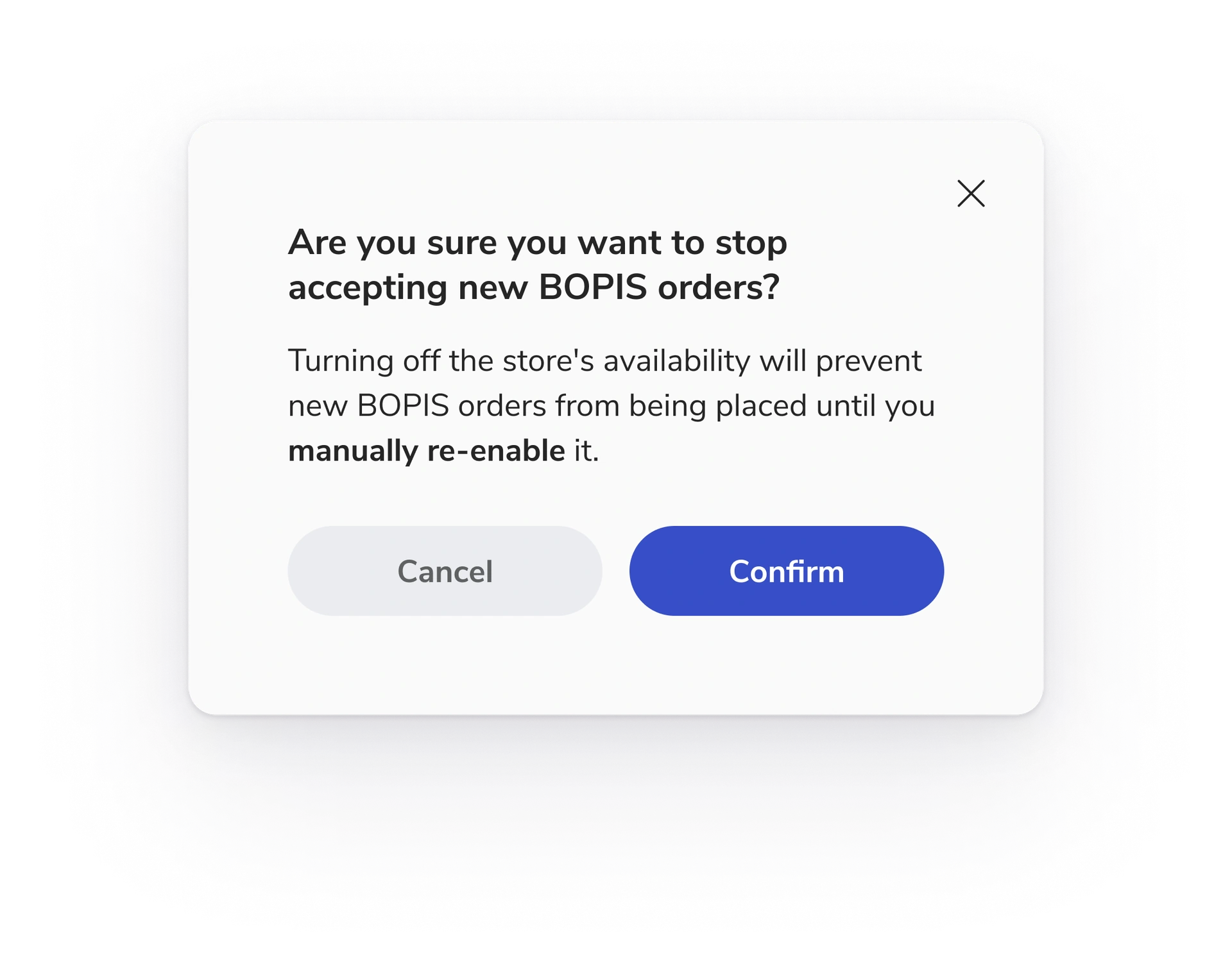
Added confirmation dialogs to prevent accidental closures.
Order management improvements
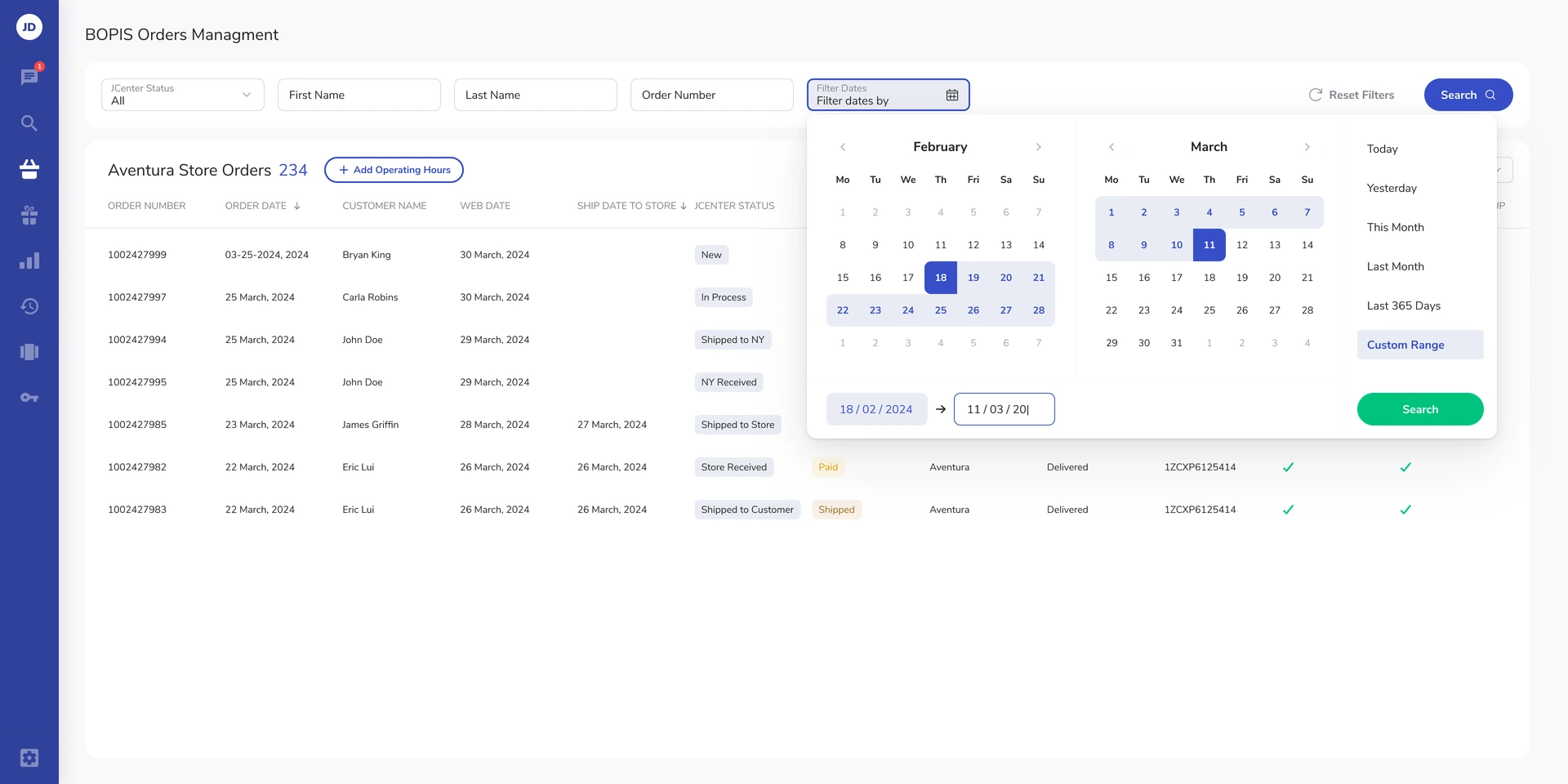
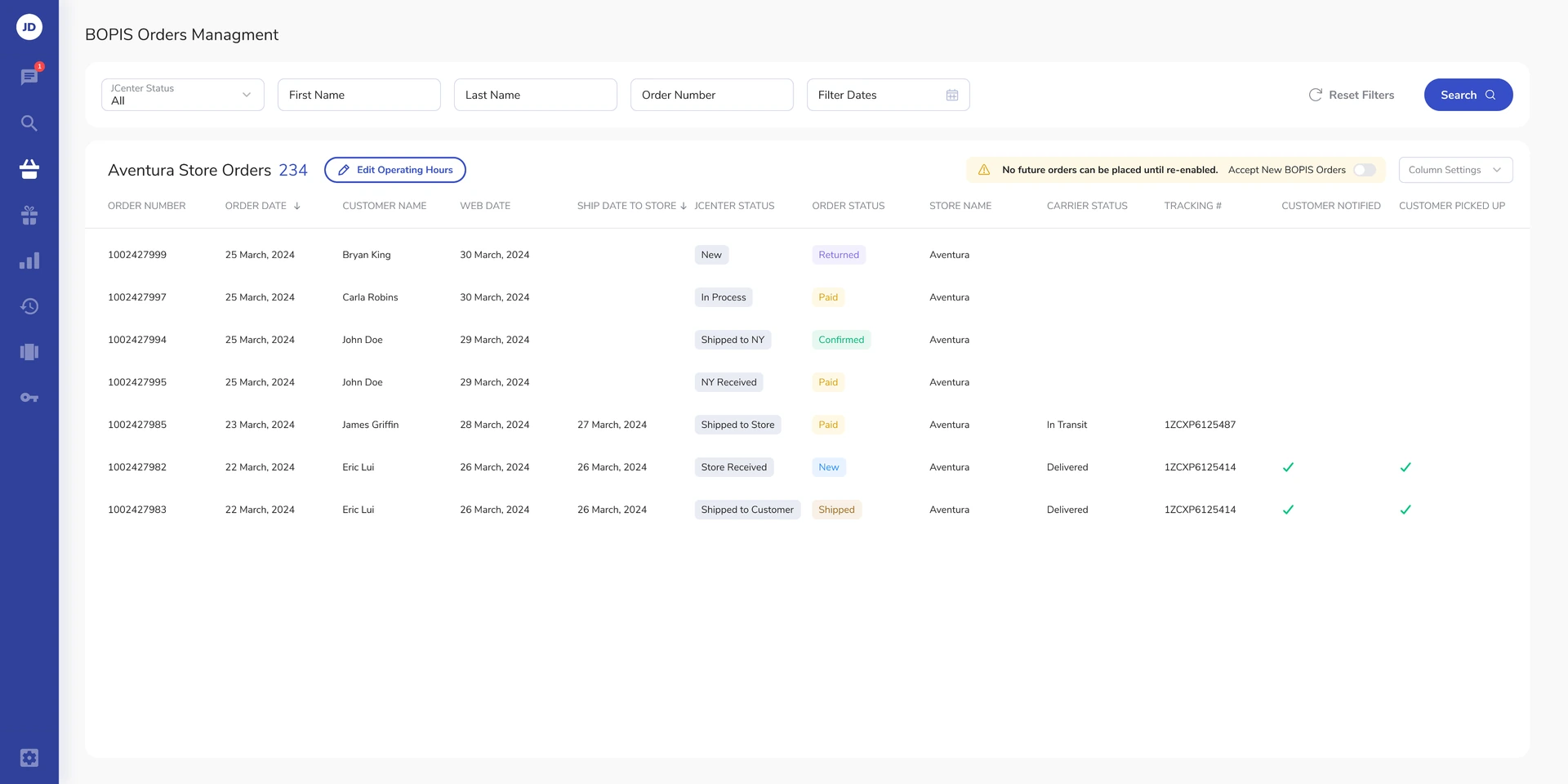
Clearer status chips such as “Store Received” or “Shipped to Customer.”
Date picker with ranges for faster filtering.
Indicators for customer notified and customer picked up.
Safeguards for managers
Toggle to stop accepting new BOPIS orders if capacity was full.
Real-time alerts when a store was closed for pickups.
Final Design
The final solution was a finance compliant, manager friendly system designed to support stores of all sizes, from boutiques with limited safe space to flagship locations with large stockrooms.
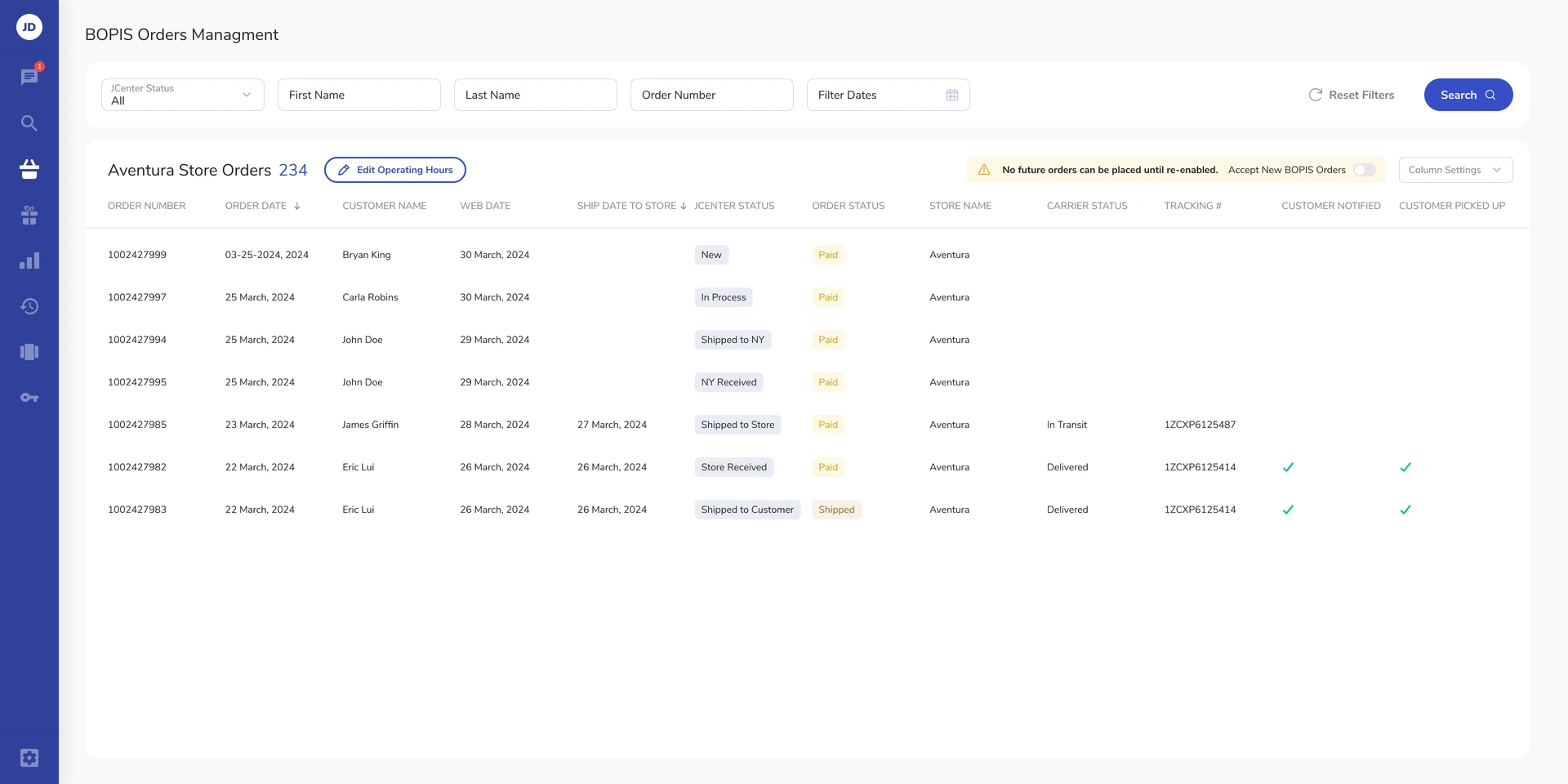
BOPIS Orders Dashboard
A single source of truth for all store orders.
Status chips and shipment tracking at a glance.
Customer notified/picked up indicators to simplify daily operations.
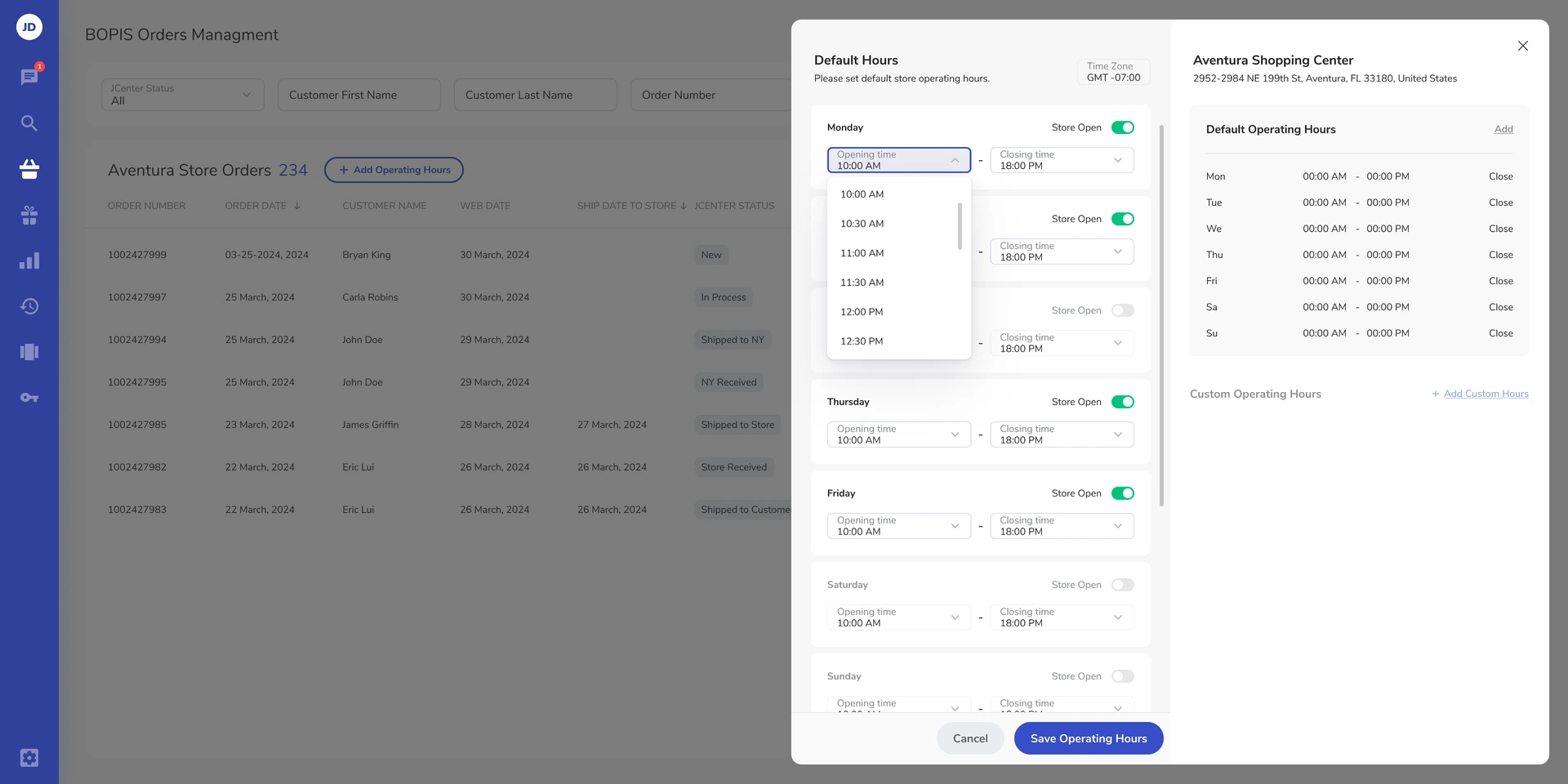
Operating Hours Management
Default weekly hours plus one-off overrides.
Real-time error prevention when a store was unavailable for pickup.
Pickup Flow
Customers signed digitally at pickup.
Status automatically progressed from “Paid” → “Shipped to Store” → “Store Received” → “Picked Up.”
What I've Learned
Compliance drives UX: Legal and finance requirements can dictate flows as much as user needs.
Designing for scale matters: The system had to serve both flagship stores with large backrooms and boutiques with limited safe space.
Cross-team collaboration is essential: Finance, operations, and logistics were all equal partners in shaping the final solution.
How Did It Make an Impact
Store managers gained operational clarity with one centralized dashboard.
Finance achieved GAAP-compliant reporting through automated timestamps and signatures.
Customers had a more predictable, professional pickup experience.
Blue Nile could confidently scale its retail operations, knowing compliance and customer experience were both protected.
Conclusion
By aligning the needs of operations, finance, and customers, the BOPIS management system became more than a dashboard, it became the foundation of Blue Nile’s in-store pickup experience.
Next project