Pastrami
Design System
For: R2Net (James Allen & Blue Nile)
R2Net's internal system powering the inventory and promotions management platform.
Complex System
Design System
Redesign
Overview
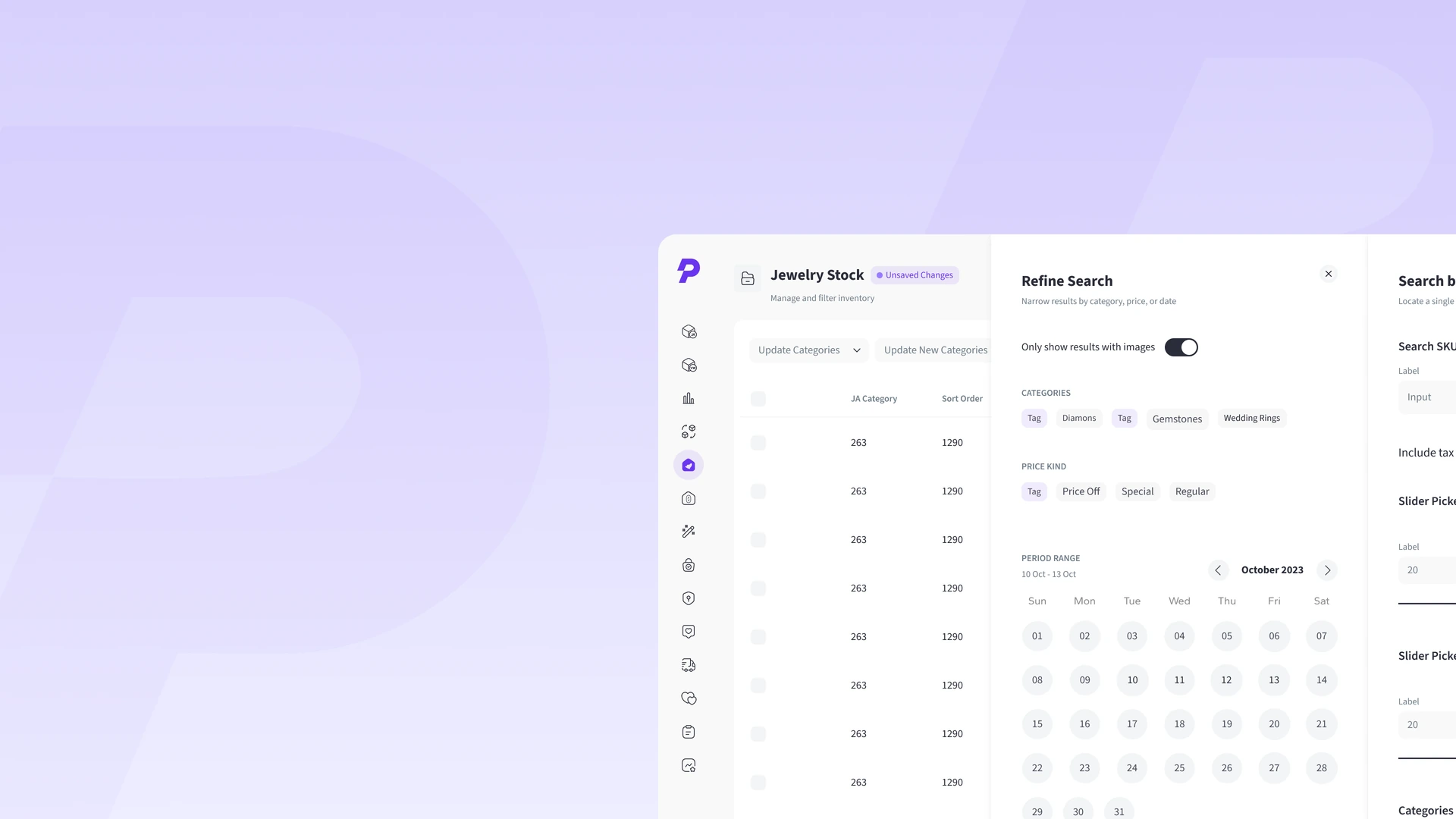
Pastrami is one of R2Net's most important internal platform, used daily by merchandising, operations, BI, and finance teams.
Over time, the system had grown organically, and that growth came with cost. The interface was inconsistent, workflows were fragmented, and critical tasks like bulk updates or item approvals took too much time. Employees learned to work around the system rather than with it.
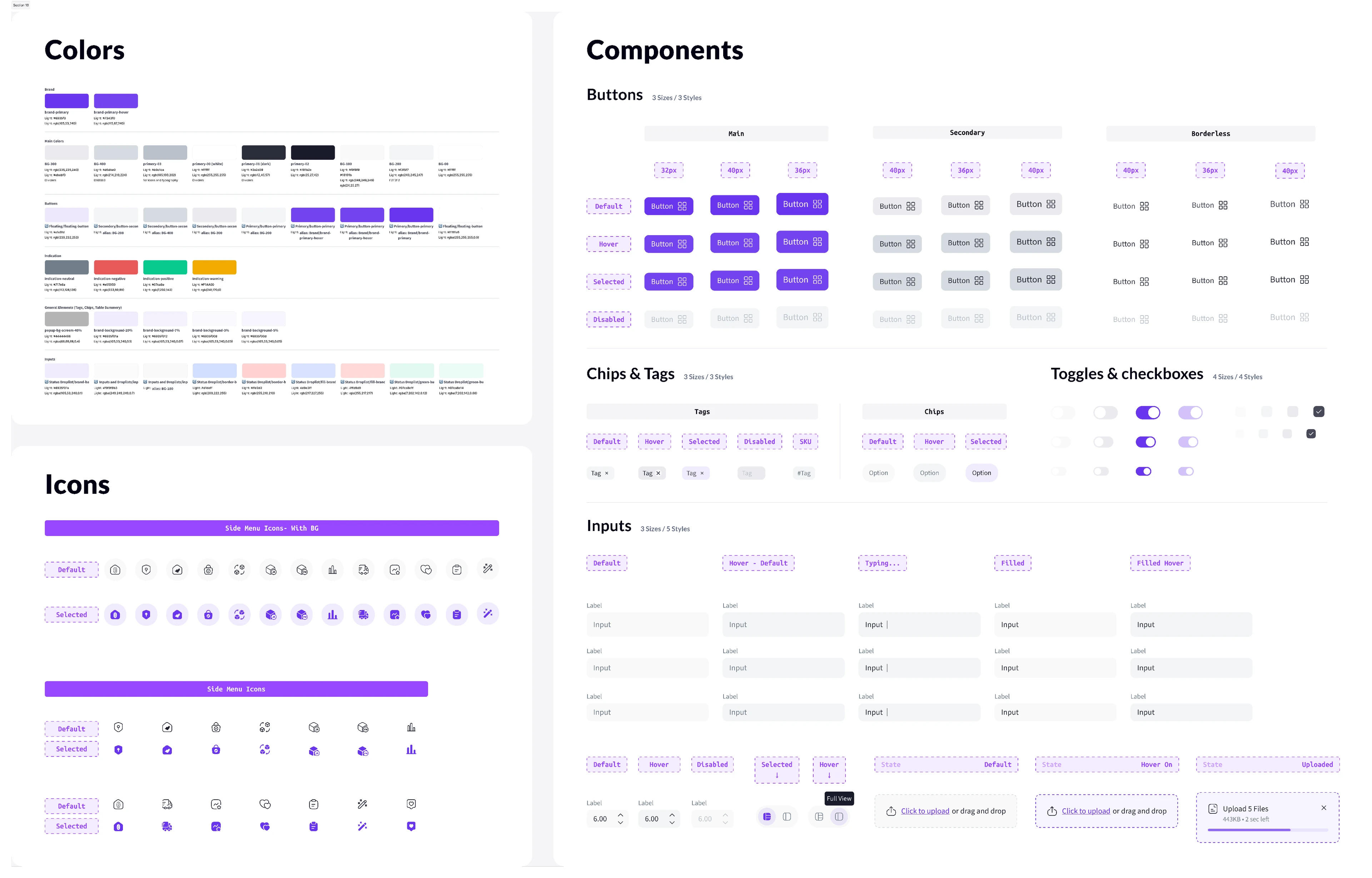
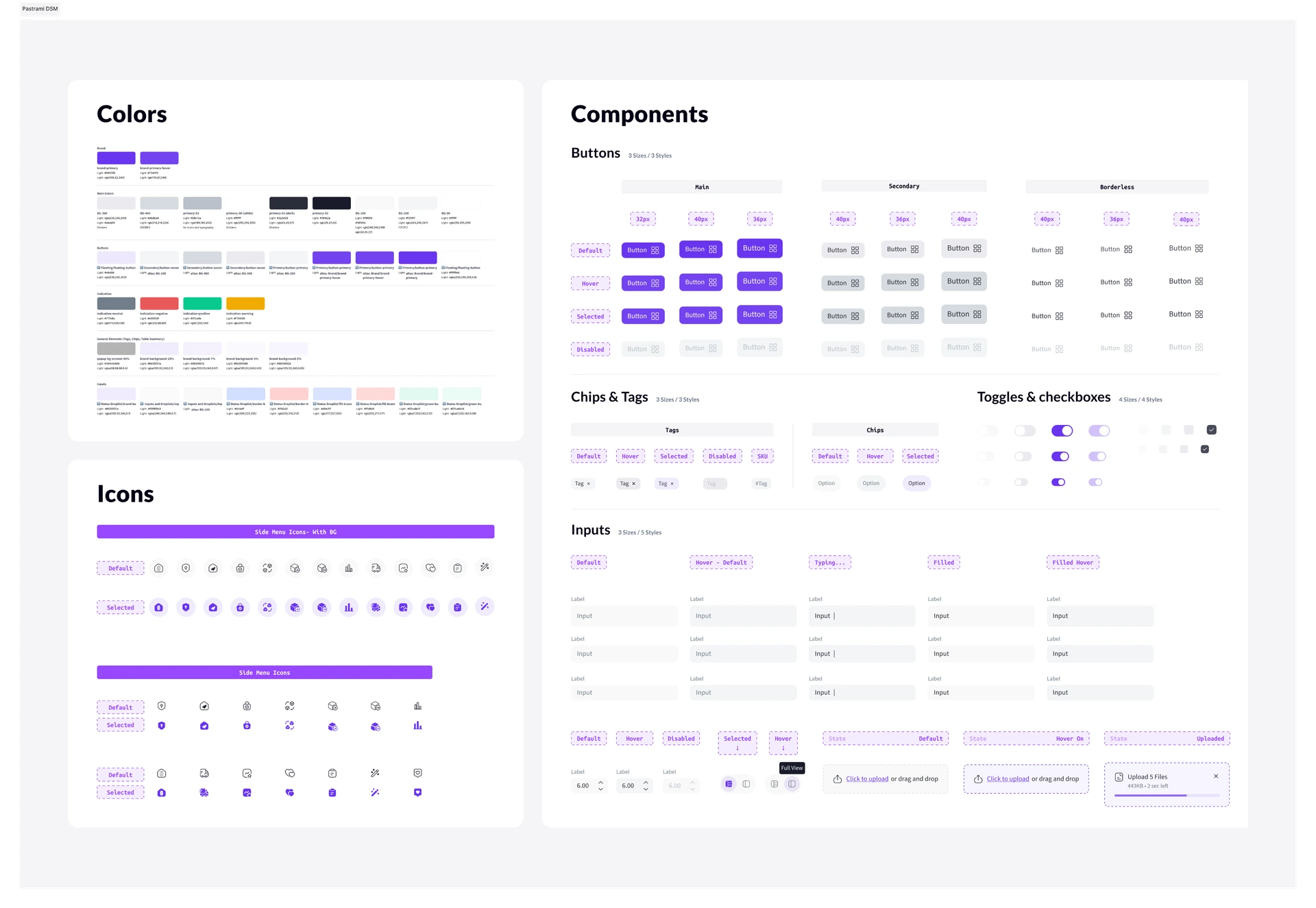
My challenge was to redesign Pastrami into a modern design system: one that was clear, consistent, and efficient - and also flexible enough to support both light and dark modes as requested by engineering.
Challenges
The main challenge was building a system that could handle the site's deep customization logic while remaining simple for different teams to operate - and seamless for customers. Pastrami manages everything behind the scenes: compatibility rules between settings and diamonds, real-time price updates, and accurate shipping dates based on vendor data.
Because the entire site depends on Pastrami's data, it's also easy for non-technical teams to accidentally break things. With so much interconnected information, the system lacked alerts to warn users when an action could impact other parts of the site, making safe updates a constant challenge.
Goals and Approach
I wanted to do more than polish the visuals. The real goal was to make Pastrami faster, clearer, and more reliable. That meant:
Rebuilding it on a design system foundation with reusable components.
Streamlining workflows like search, filtering, bulk updates, and approvals.
How can non-technical users successfully work with the system
Making sure the design would scale to new modules and new use cases in the future.
I began with wireframes of the most common workflows - inventory search, item editing, bulk updates, and approvals - and validated the structure with teams before moving into high-fidelity design.
Old vs New
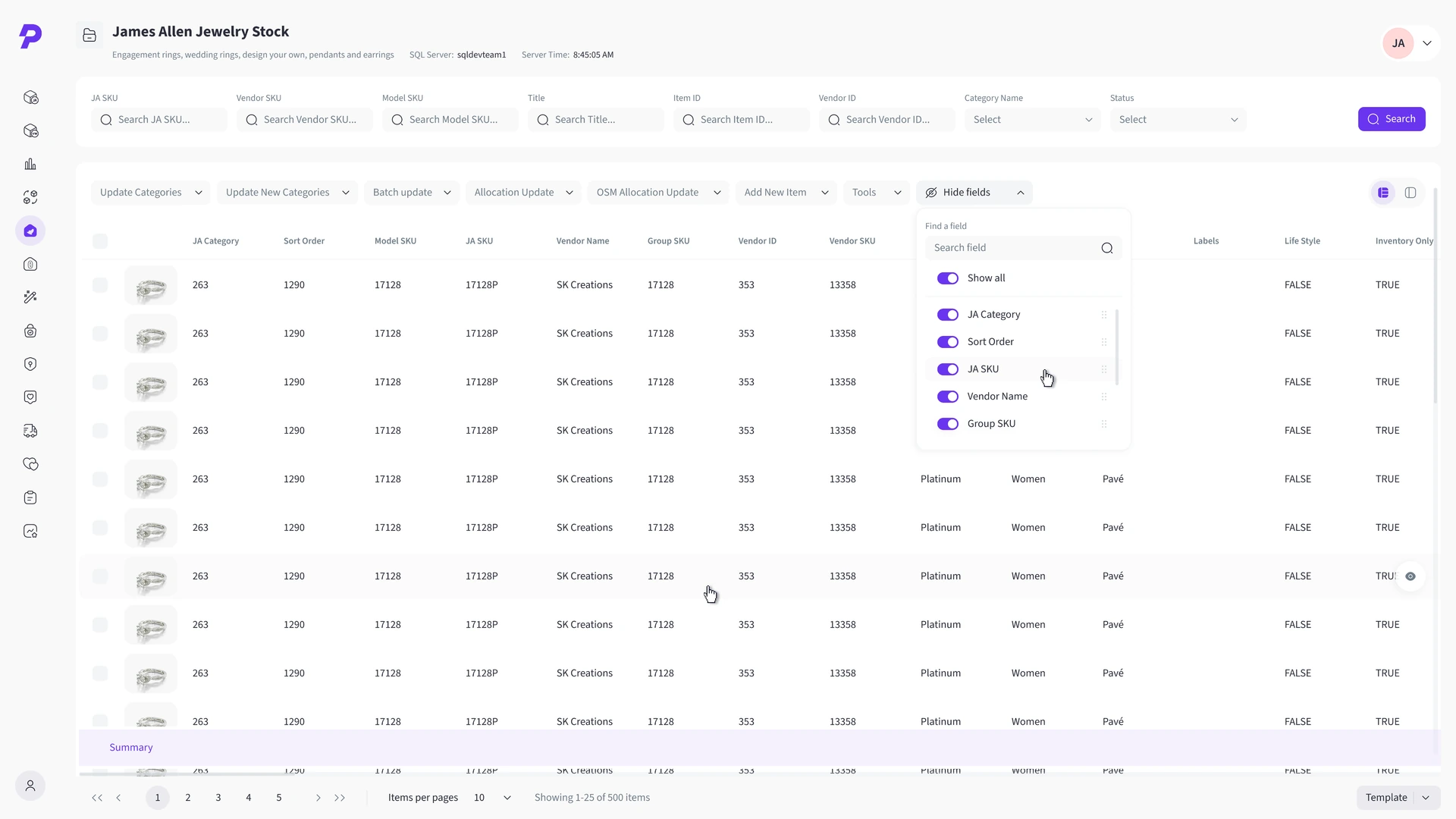
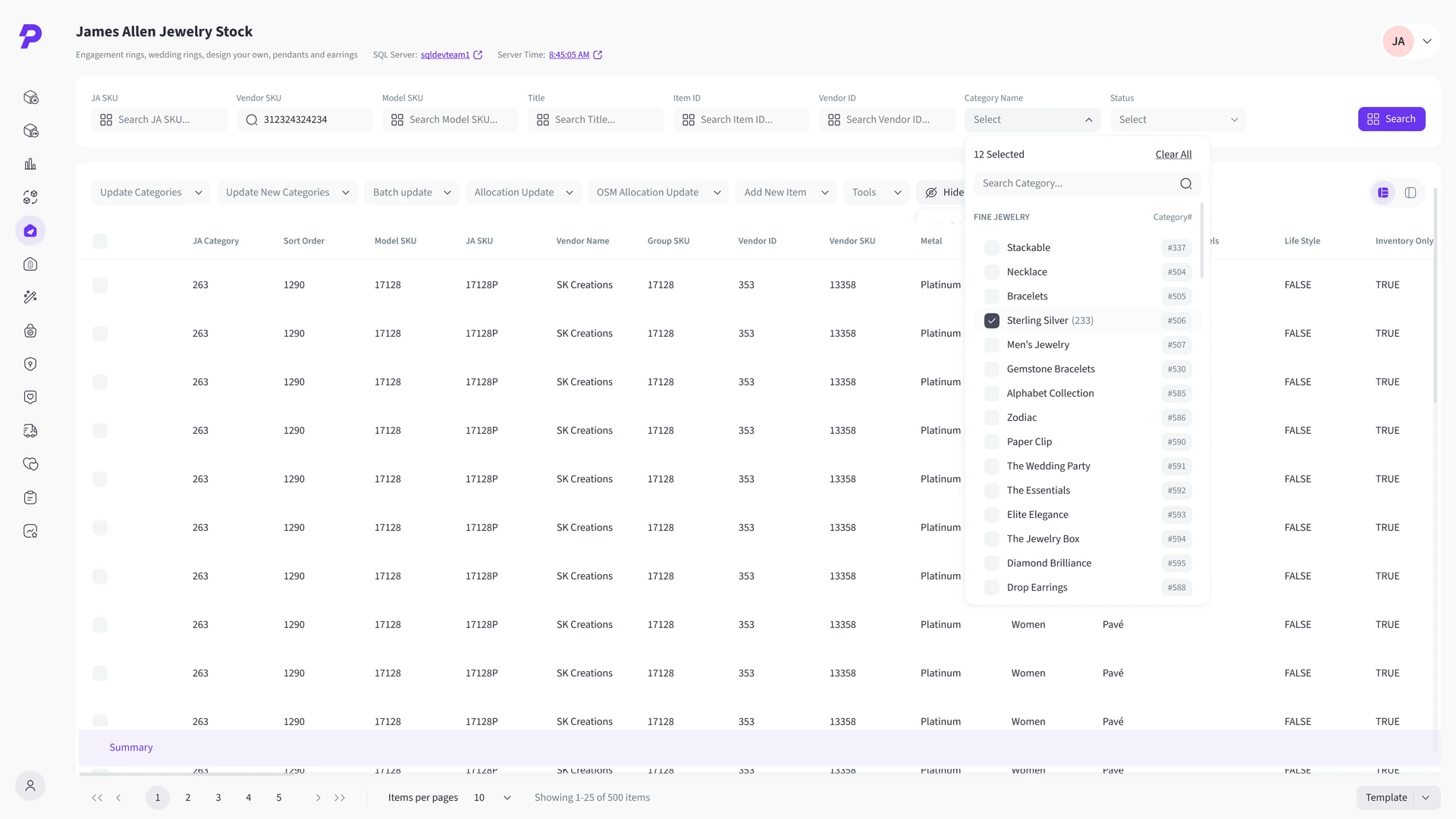
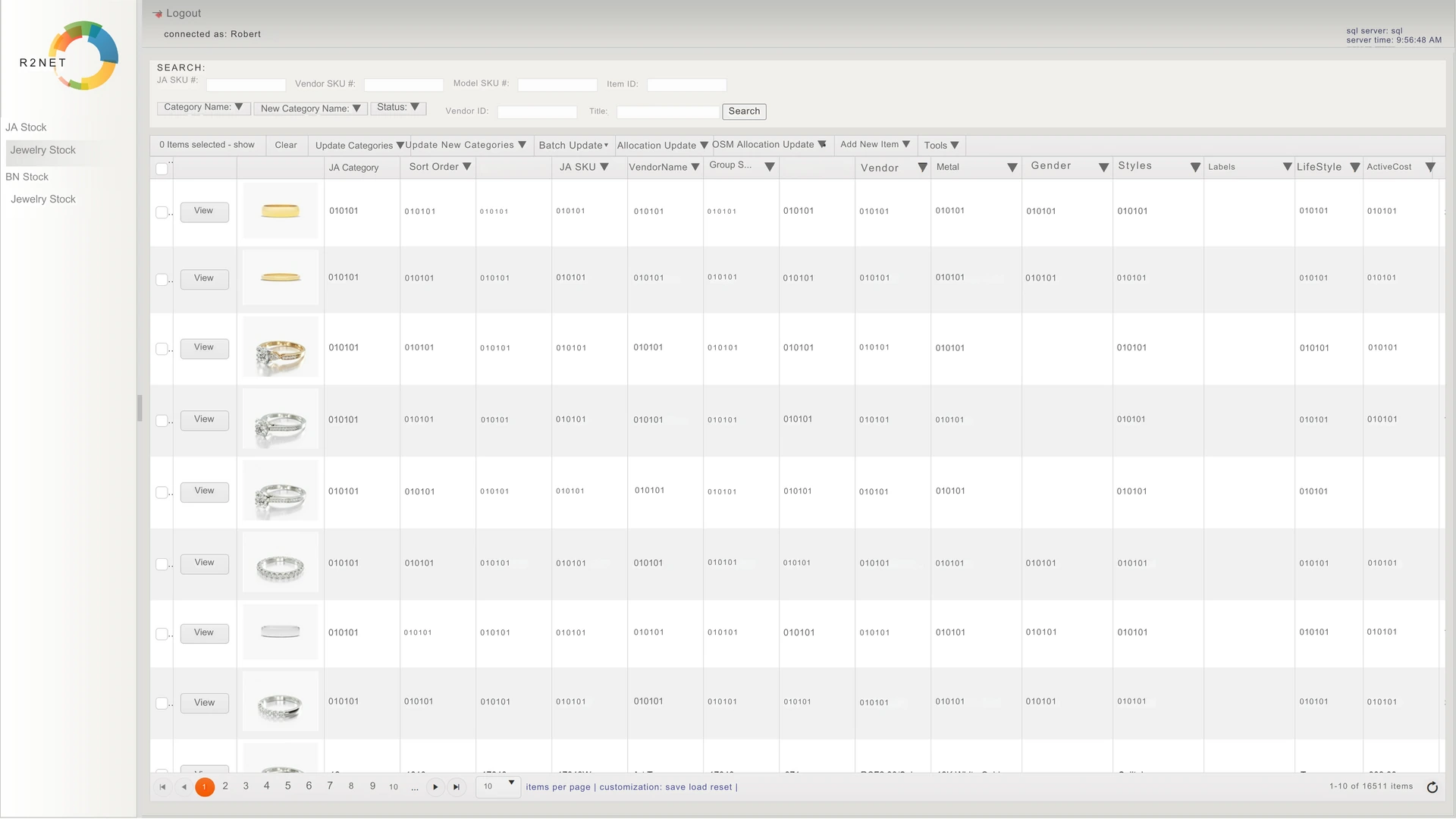
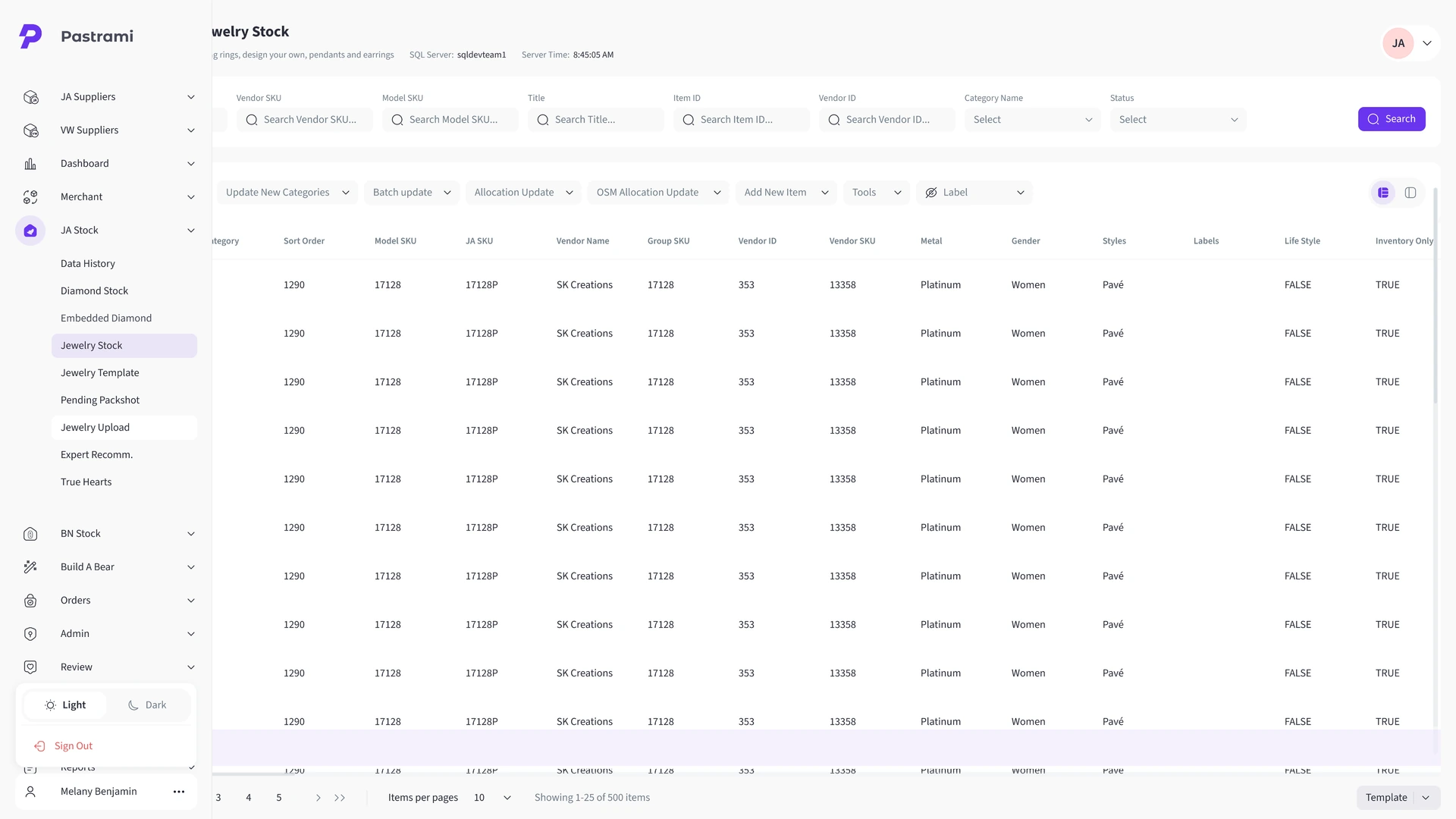
The old Pastrami worked, but it slowed people down. The redesign made it easier, faster, and more enjoyable to use. Key improvements included:
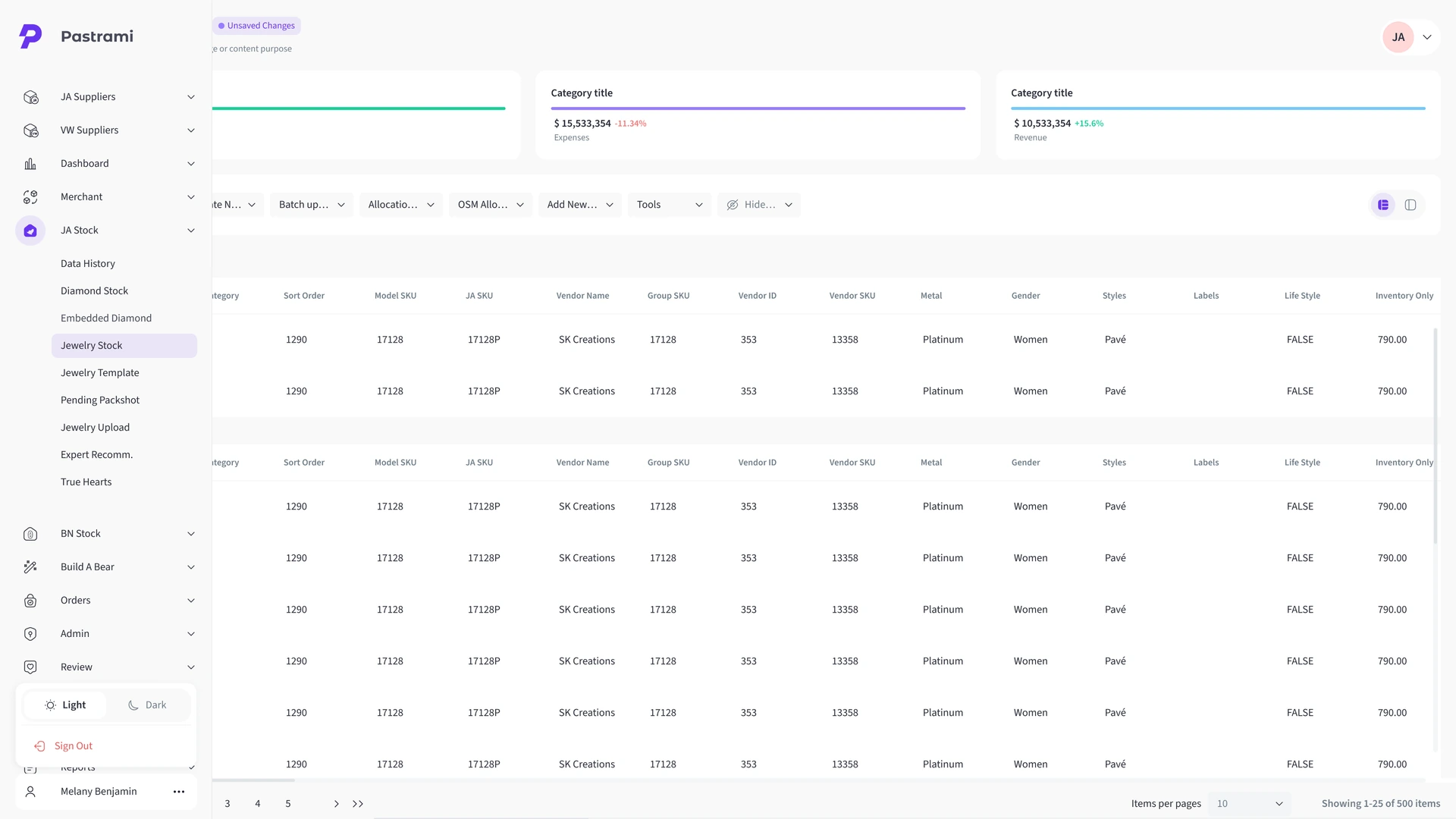
Tables - easier to scan with clearer hierarchy and spacing. Users can hide/show columns and save templates to customize their view.
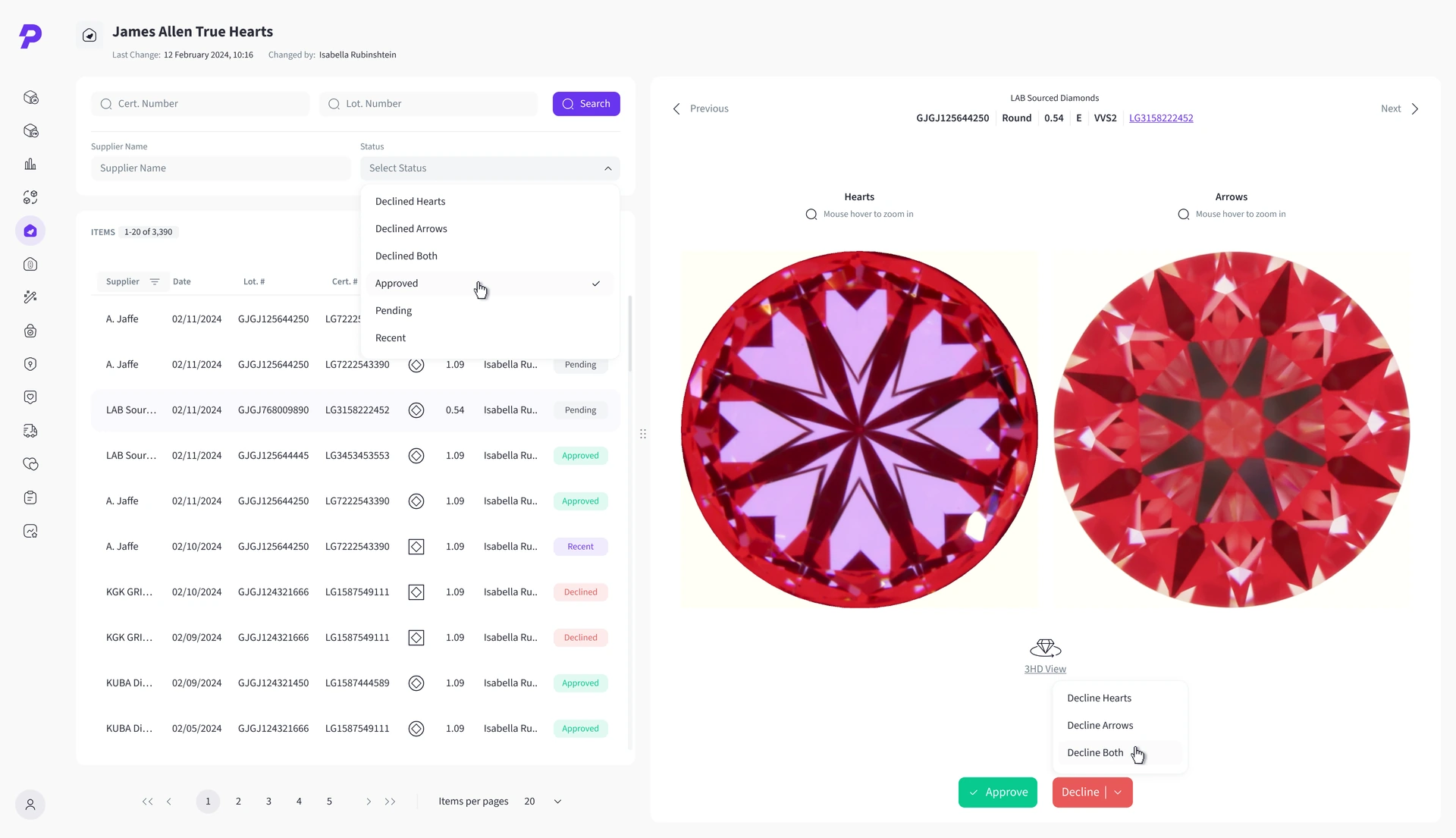
Search and Filtering - more powerful, with the ability to filter by SKU, vendor, category, or status directly in one place.
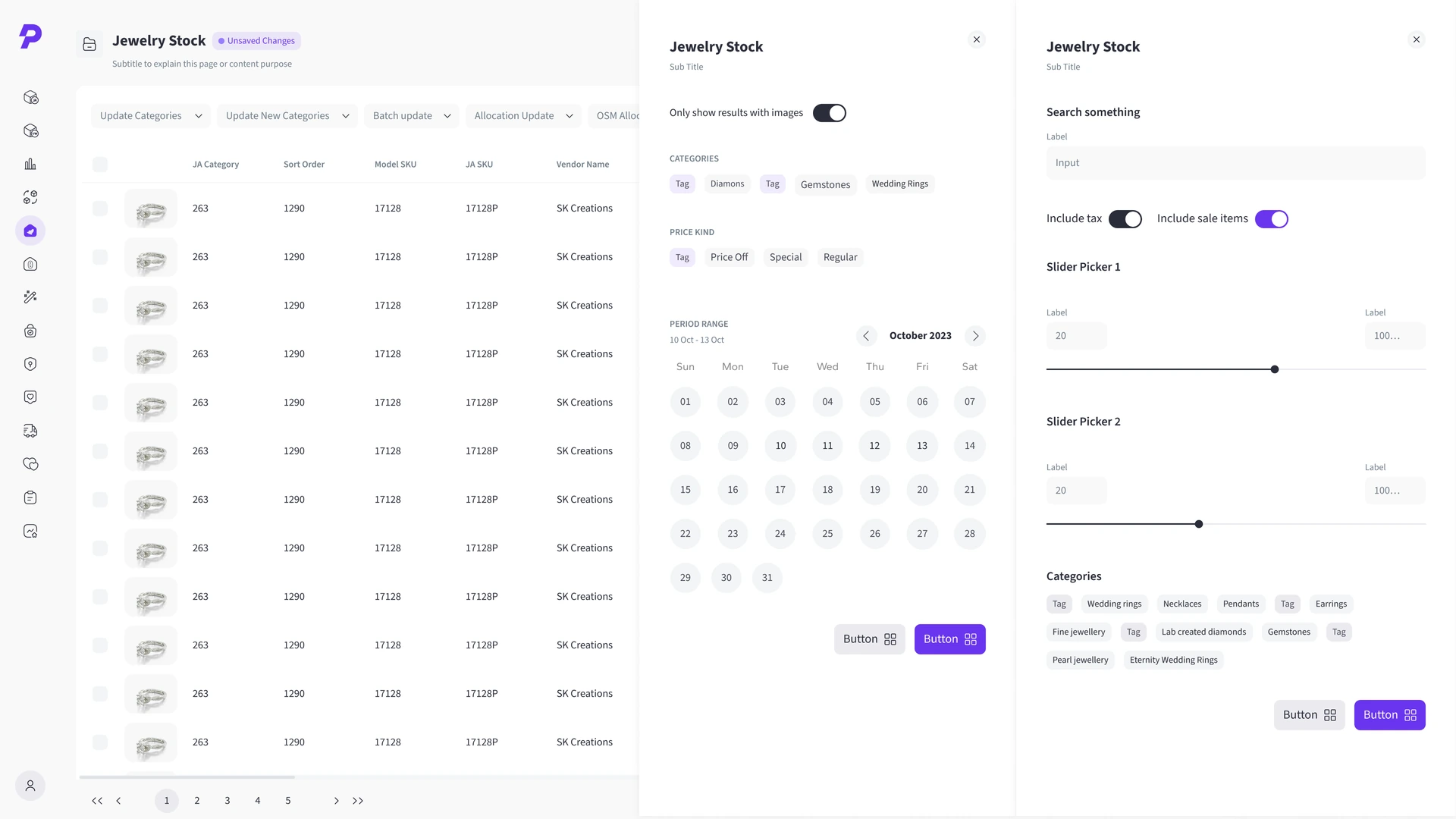
Bulk Actions - simplified into grouped panels (categories, pricing, allocation), making updates across thousands of items less error-prone.
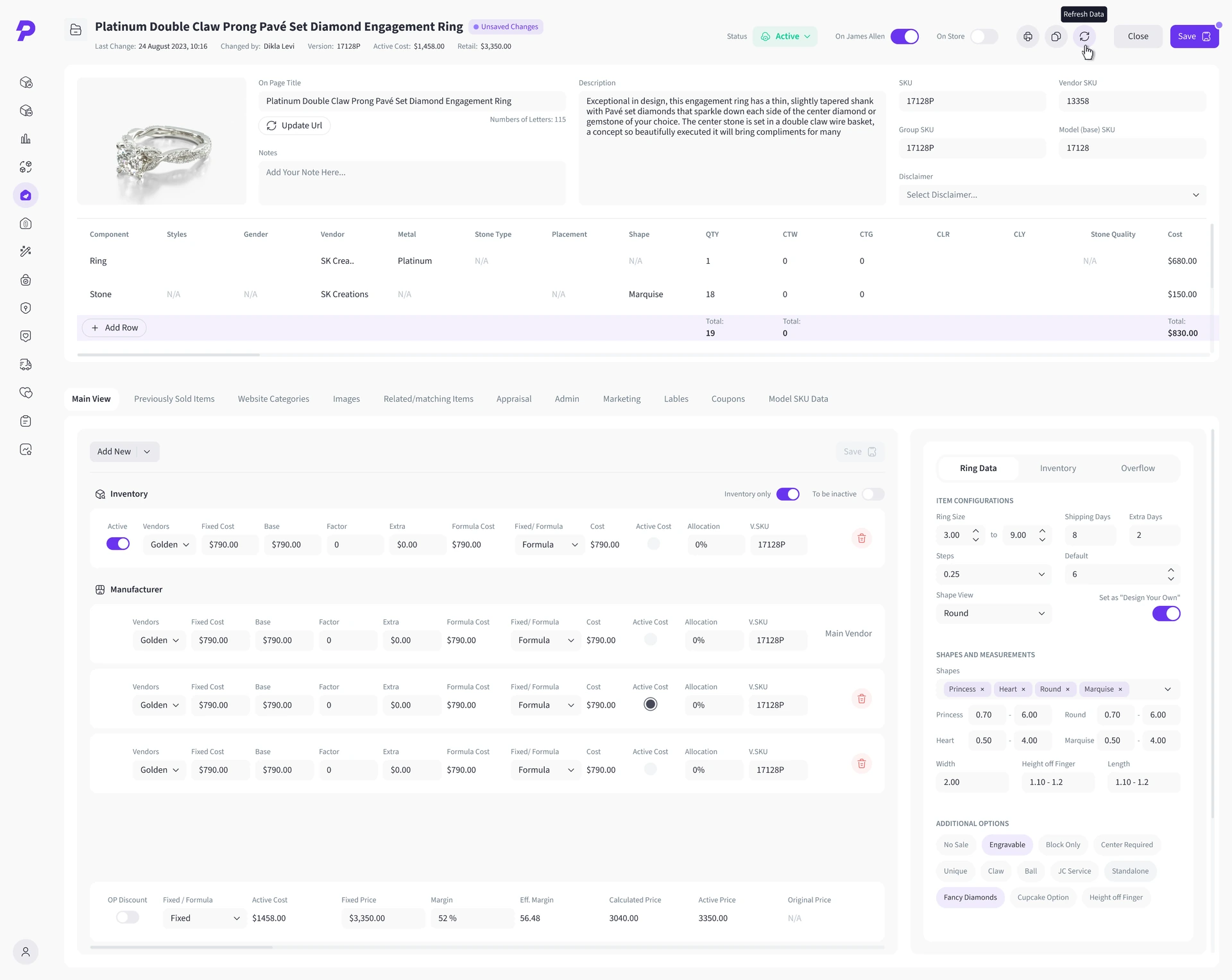
Item Cards - redesigned to collapse for quick edits or expand for detailed views, including rich previews (like 3HD images for diamonds).
Audit Logs - fully structured, with timestamps and user roles so every change is tracked for finance and compliance.
Dark Mode - introduced through tokenized colors and states, improving accessibility and reducing eye strain for long sessions.
I began with wireframes of the most common workflows: inventory search, item editing, bulk updates and approvals.
What I've Learned
I collaborated with another designer on this project. I focused on the design system foundations: building tokens, defining the button and icon libraries, and ensuring consistency across both light and dark themes. I also redesigned the core workflows around tables, search, filtering, and batch updates.
My teammate concentrated on form design, detailed interactions, and documenting the system for developers. I worked closely with engineering, aligning regularly to make sure the system was not just consistent but also practical to implement.
This project taught me the importance of scalability in design systems. Dark mode wasn't in the original scope, but because I shifted to tokens early, I was able to add it without breaking the rest of the system.
I also learned how much impact small usability improvements can have in internal tools. Features like customizable tables or clearer bulk update panels might look minor on paper, but they drastically reduced friction for the teams using Pastrami every day.
And finally, I saw the value of deep collaboration. Ops, finance, and engineering each had different needs, and the final product worked because all of those voices shaped it.
Final thoughts
The new Pastrami design system transformed an outdated tool into a platform people actually enjoy working with. Operations teams complete updates faster and with fewer errors. Finance benefits from audit-ready logs that improve accountability. Merchandisers have better approval flows with the visual detail they need to make confident decisions.
For R2Net, Pastrami is now more than a tool, it's a scalable foundation that supports today's workflows across both James Allen and Blue Nile, while flexing as the brands continue to grow.
For me, the success of Pastrami wasn't only the polished screens, but the foundation I built underneath. I turned a legacy headache into a design system that simplifies the present while preparing for the future.
Next project